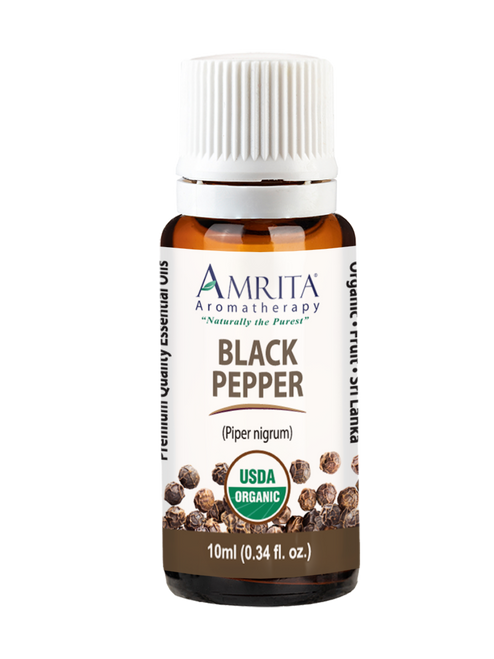


- Other Names
- Spruce Oil, Bog Spruce, and Swamp Spruce
- Farming Method
- Certified Organic
- Plant Part
- Needles and Twigs
- Country of Origin
- Canada
- Application Method
- Bath, Diffusion, Inhalation, Massage, and Topical
- Scientific Name
- Picea mariana
- Extraction Method
- Steam Distilled
Spruce Black Organic Essential Oil is derived from Picea mariana, a small, slow-growing evergreen conifer that flourishes in the cold northern forests of North America. With its fresh, woody, and coniferous aroma, this oil carries the spirit of the wilderness and the wisdom of centuries-old traditions. Historically, Indigenous peoples across North America valued the Black Spruce for both its practical and medicinal uses — crafting tools and canoes from its strong wood while using its resin and needles for healing and purification. The tree remains an essential part of Canadian heritage, prized for its versatile wood, aromatic resin, and grounding scent that connects one to the natural world.
Beyond its deep-rooted cultural history, Black Spruce Essential Oil is treasured for its wide range of therapeutic benefits.* Its calming and grounding properties help ease stress, support the nervous system, and promote emotional balance.* The crisp, invigorating aroma aids respiratory wellness by opening the airways and encouraging deep, steady breathing, while also soothing sore muscles, easing joint tension, and reducing inflammation.* Distilled from the needles and twigs, this refreshing oil opens the mind, body, and spirit, making it ideal for meditation, massage, or daily self-care rituals.* Black Spruce Essential Oil truly embodies nature’s resilience and renewal, offering clarity, strength, and tranquility in every drop.*
About the Plant:
Picea mariana (Black Spruce) is a modestly sized evergreen conifer in the pine family. In typical habitats, it grows between 15 and 50 feet (4.5-15 m) tall, with trunk diameters of 6-20 inches (15-50 cm), though exceptional specimens may reach up to 98 feet (30 m) and 24 inches (60 cm) in diameter.¹ This upright tree displays a narrow, spire-like crown with somewhat scruffy, drooping branches and upturned branch tips. Its bark is thin, scaly, and grayish-brown, while its foliage consists of stiff, four-sided needles approximately 6-15 mm long — dark bluish-green above and somewhat paler below.¹ The cones of Black Spruce are the smallest among spruces, about 1.5–4 cm long, produced in dense clusters in the upper crown.⁴
The name “mariana” was assigned by the botanist Philip Miller. While historically interpreted by some to mean “of Maryland,” the botanical Latin derivation more commonly means “of the Virgin Mary,” a traditional honorific in horticultural naming conventions.²,⁵ Over its range, P. mariana naturally hybridizes with Picea rubens (Red Spruce), and rarely with Picea glauca (White Spruce), though the hybrids often require microscopic study to discern.¹ Its structural form and growth habit distinguish it from firs — spruce cones hang pendulous, and the persistent leaf-bases and radial needle arrangement differ markedly from true firs.
Where It Grows:
Black Spruce has a broad native range across North America, dominating much of the boreal forest in Canada. It is found in all 10 provinces and the three territories, and is especially abundant in Newfoundland and Labrador, where it is the province’s official and most common tree species.⁶ Its southern distribution reaches into parts of Alaska, the Great Lakes states, and the upper Northeast United States, particularly in regions of peatlands and cold, moist soils.⁷ As a boreal species, it is emblematic of the taiga biome, thriving where winters are long and soils are acidic and poorly drained.¹
Ecologically, Black Spruce is highly adapted to wet, organic soils — peat bogs, muskegs, and saturated flats — yet can persist on a variety of substrates, including humus, clay, sand, and shallow mineral soils.¹,⁸ Frequently, it occurs in pure stands on peat soils and in mixed stands on mineral soils, often forming even-aged cohorts following fire disturbance.⁹ Its shallow and wide-spreading root system, however, makes it vulnerable to windthrow, particularly in saturated or thawing soils.¹⁰ In northern regions, permafrost may underlie its habitat, contributing to the species’ success via minimal soil competition.¹
Traditional Uses and Lore:
For centuries, Indigenous peoples across North America employed the Black Spruce in myriad utilitarian and medicinal ways. The roots were split or woven to craft containers, dippers, baskets, and bindings for snowshoes or birchbark canoes; its wood was fashioned into canoe paddles, and its resin (spruce gum) was used to caulk seams.¹¹ Medicinally, the gum was applied as a salve for wounds and skin ailments; decoctions of bark, needles, or cones served as teas or gargles to treat colds, sore throats, and respiratory issues.*¹²
Beyond those uses, Black Spruce played a role in early North American brewing traditions. Its young twigs and buds were boiled with molasses or sugar to make spruce beer — a drink rich in vitamin C and used historically to prevent scurvy among European explorers and settlers.¹³ Its resin has also been chewed as spruce gum, both as a masticatory and as a healing salve.¹⁴ In modern times, its small stature limits its use for structural lumber, but it remains a vital source of pulpwood and finds occasional use in craft woodwork, energy, and specialty products — continuing its long legacy of cultural and practical significance.*⁶
Other Facts:
-
-
- Scent: Woody, Fresh, and Coniferous Aroma
- Fragrance Note: Top to Middle Note
- Composition: Bornyl Acetate, Camphene, α-Pinene, Delta-3-Carene, and D-Limonene
- Family: Pinaceae Family
-
Footnotes / Sources:
- S. Forest Service, Silvics of North America: Black Spruce Forest Service R&D
- Virginia Tech Dendrology, Latin meanings of Picea mariana cnre.vt.edu
- USDA Plant Fact Sheet, Black Spruce (Picea mariana) USDA Plants Database
- University of Rhode Island fact sheet on Picea mariana University of Rhode Island
- Britannica, Picea mariana (Black Spruce) range & taxonomy Wikipedia
- USDA & Natural Resources Canada sources, and Picea mariana distribution Wikipedia+4Forest Service R&D+4USFS Research and Development+4
- USDA Southern Research Station, habitat & range descriptions USFS Research and Development
- USDA Silvics & Plant Fact Sheet Forest Service R&D+1
- USDA Silvics & related forest ecology sources USFS Research and Development+1
- USDA Silvics notes on windthrow, root system, permafrost associations USFS Research and Development+1
- USDA Silvics & historical uses in Plant Fact Sheet USFS Research and Development+2Forest Service R&D+2
- Same sources as above, plus ethnobotanical records summarized in forestry texts USFS Research and Development+1
- History of spruce beer, including use by European explorers com+2Wikipedia+2
- Spruce gum history and indigenous chewing & resin uses Wikipedia
*These statements have not been evaluated by the Food and Drug Administration. These products are not intended to diagnose, treat, cure, or prevent any disease.
- USDA Certified Organic
- Assists Exhausted Adrenals from Chronic Stress
- Lessens Chronic Fatigue and Mental Exhaustion
- Supports Clear, Easy Breathing from Congestion
- Click here to read Amrita's blog: All About Black Spruce Essential Oil
- Check out the tabs below to learn more about Black Spruce
Topical Application (for use on the skin):
|
||||
|
|
||||
|
|
Diffusion / Inhalation Application (add a few drops to a nebulizer or nasal inhaler):
|
|
-------------------------------------------------------------------------------------------------------------------------------------------------------------------
Blends Well With:
-------------------------------------------------------------------------------------------------------------------------------------------------------------------
Safety Precautions:
-
- Black Spruce Essential Oil is non-toxic, non-irritant, non-sensitizing.*
General Precautions:
-
- Use essential oils only in diluted form on the skin and never internally.
- Always be careful when using essential oils with children.
- Give them only low doses, or better, consult a qualified aromatherapy expert before using.
- Also, use essential oils with care and only under the proper guidance of an expert while pregnant or if you have liver damage, epilepsy, cancer, or other serious health problems.
*These statements have not been evaluated by the Food and Drug Administration. These products are not intended to diagnose, treat, cure, or prevent any disease.
Black Spruce Essential Oil offers powerful support for the nervous system, helping to calm stress, reduce anxiety, and restore emotional equilibrium.* Its high concentration of α-pinene and β-pinene — naturally occurring monoterpenes — has been studied for their ability to ease anxious behaviors and promote relaxation through interaction with GABA receptors, the same pathways targeted by many calming agents.¹,² These compounds work synergistically to balance mental energy, soothe tension, and stabilize mood, creating a centered yet refreshed state of mind.* Inhaling the crisp, coniferous aroma of Black Spruce may also encourage parasympathetic activation, slowing the heart rate and deepening breathing, which supports a sense of inner calm and focus.*³ This makes it an ideal companion for mindfulness practices, meditation, or simply grounding moments throughout the day.*
That nervous system support naturally connects to the respiratory system, where Black Spruce continues to demonstrate restorative properties.* Its aromatic molecules open and clear the airways, assisting in easier, deeper breathing while reducing sensations of tightness or congestion.* Studies show that essential oil constituents like α-pinene exhibit broncho-dilatory and anti-inflammatory actions within the respiratory tract, helping to relax airway muscles and reduce mucus accumulation.*⁴,⁵ This makes Black Spruce an excellent oil for seasonal transitions or times of mild respiratory discomfort.* When diffused, its cool, forest-fresh aroma helps purify the air and promote clean, steady respiration, reinforcing both mental clarity and physical ease.*
The interplay between breath and movement extends into the musculoskeletal system, where Black Spruce helps alleviate muscular tension and physical fatigue.* Its natural anti-inflammatory and analgesic compounds support recovery after exertion, helping to ease joint stiffness and reduce inflammation associated with overuse or strain.*⁶,⁷ These soothing qualities reflect the same grounding energy that benefits the nervous and respiratory systems, forming a holistic pathway to renewal — calming the mind, deepening the breath, and relaxing the body.* Whether used in massage blends, diffusion rituals, or restorative practices, Black Spruce Essential Oil embodies a sense of balance that begins in the breath and radiates through the whole body.*
The following is a list of conditions which Black Spruce Essential Oil addresses by category:
|
|
|
Footnotes / Sources:
- Daily Inhalation of α-Pinene in Mice: Effects on Behavior and Organ Accumulation — shows anxiolytic behavioral effects of α-pinene in rodent inhalation models.
- α-Pinene, a Major Constituent of Pine Tree Oils, Enhances Non-Rapid Eye Movement Sleep in Mice — demonstrates GABA receptor modulation and sedative-like properties.
- Effects of Plant-Emitted Monoterpenes on Anxiety Symptoms — suggests monoterpene inhalation correlates with parasympathetic activation and relaxation in humans.
- Essential Oils in the Treatment of Respiratory Tract Diseases — review of anti-inflammatory and broncho-dilatory properties of essential oil constituents.
- Pharmacologic Effects Approach of Essential Oils and Their Active Ingredients in Respiratory Diseases — mechanisms for airway relief and mucolytic actions.
- Therapeutic Potential of α- and β-Pinene: A Miracle Gift of Nature — overview of anti-inflammatory and analgesic activity of pinene compounds.
- A Systematic Review of the Anti-Inflammatory and Other Pharmacological Effects of Essential Oils — meta-analysis on pain relief and inflammation modulation.
*These statements have not been evaluated by the Food and Drug Administration. These products are not intended to diagnose, treat, cure, or prevent any disease.
Bottles are filled by volume. Some bottle sizes may not be filled to the top, but do contain the volume of oil specified.
|
Click the links below to view GC Analysis: |
Click the links below to view CoA Analysis: |
|
Click the link below to view Safety Data Sheet (SDS): |